


PIB
Project and Infrastructure Bankability
Project EPCIM
The EPCIM (Engineering, Procurement, Construction, Installation, and Management) is a comprehensive project delivery model, often used in oil & gas and infrastructure sectors. It combines traditional EPC services with installation and integrated management, aimed at improving project efficiency, accountability, and reliability under a bankable development.
Bankable Project Financing
A method of funding large-scale, long-term infrastructure or industrial projects, where debt is repaid solely from the project's cash flow, not the sponsors' balance sheets. This non-recourse or limited-recourse structure allows companies to manage risks for major initiatives or Business Industries like energy, mining, or transportation by isolating them in a Special Purpose Vehicle.
Project Exit Plan
A project IPO exit plan involves transforming a private company into a public entity to provide liquidity for investors, typically requiring a period of 18–24 months of preparation to meet regulatory standards. Key steps include professionalizing board governance, cleaning up cap tables, establishing robust financial reporting (GAAP/IFRS), and appointing underwriting banks.
Why is Bankability key to project implementation?
Bankability plays a pivotal role in securing financing from banks, private investors, or financial institutions for the successful Engineering, Procurement, Construction, Installation and Management (EPCIM). However, a bankable project always involves a solid and sound financial, economic, and technical plan.
Why is bankability key to project implementation?
Bankability plays a pivotal role in securing financing from banks, private investors, or financial institutions for the successful EPCIM. However, a bankable project always involves a solid and sound financial, economic, and technical plan.

Bankable Project Preparation
The Bankable Project Preparation (BPP) is a crucial phase in any project. It involves the detailed planning and organization needed for successful execution. It encompasses defining objectives, identifying risks, developing a comprehensive plan, and gathering necessary resources. Effective project preparation is vital for ensuring projects stay on track, within budget, and meet their intended goals.
A well-structured BPP is highly important. It promotes the quality of developing a bankable and investment-ready project at the early stage and provide specific technical and/or financial support to the project owner or project company or concessionaire. A Project Bankable Development (PBD), through reimbursable advances (pre-operational expenses, including the Development Fee), shall always be undertaken by a qualified and experienced Developer like MDACI that guarantees successful implementation. The BPP involves following tasks and responsibilities of the project.
-
- Pre-feasibility studies and feasibility studies, including value-for-money analysis;
- Detailed Technical Designs (DTD), including technical studies;
- Technoeconomic Study (including business plan, standards & specifications);
- Environmental Impact Assessments, including gender studies, and-all;
- Project contracts (including Draft EPCI / Procurement Agreement, and-all;
- Developing the project tender documents, including tender notice;
- Tender publication and processing;
- Climate proofing of projects, including resilience to climate change; and
- Other related project preparation works and activities.
PRIMARY DOCUMENTS OF A BANKABLE PROJECT
-


PROJECT BRIEFING MEMORANDUM
The Project Briefing Memorandum (PBM) (aka a Project Brief or Memo) is a concise document (1-2 pages) that outlines the essential elements of a project at its initiation or early development stage.
-
PROJECT ADMINISTRATION MANUAL
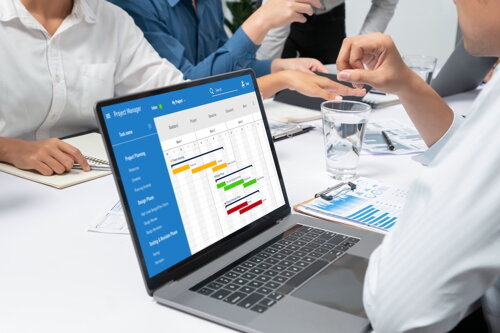
The Project Administration Manual (PAM) is the main Management Document and provides the key guidelines for the successful implementation of a Project to bankability, financeability.
-

PROJECT INVESTMENT MEMORANDUM
The Project Investment Memorandum (PIM) of a Project is a comprehensive confidential document created to inform potential investors, lenders, or partners on a specific investment opportunity.
-

INFORMATION MEMORANDUM
The Information Memorandum (IM) of a Project is a comprehensive document designed to inform stakeholders, investors, or lenders detailing a project’s scope, objectives, risks, and financial viability.
Market Sound
Also known as Test Market, a Market Sounding is the process of assessing the reaction of the market to a proposed project requirement, and the level of market interest in the project, including investors, financiers, promoters and target audience. Market sound also enables the Project Developer (MDACI / MDACI CONSORTIUM) to receive important feedback from the Project Entities, consisting mainly of EPC Contractors, Stakeholders, and the Authorities at the early statge of the Project preparation phase and shape the risk allocation matrix in a market-acceptable manner at this stage of the Development. For instance, the Briefing Memorandum (BM) or Information Memorandum (IM) created and compiled by the Project Lead Developer is generally used to enlighten and attract potential investors and promotors to invest in and promote the implementation of Projects. Therefore and as such, the Lead Developer, MDACI, assures to bring all the aforementioned Project Entities' feedback, including financiers' feedback on board to make the project bankable at the early stage through other formal documents such as Investment Memorandum (IM) and Project Administration Manual (PAM).
How to conduct a market sounding?
The market testing may take a number of forms, such as meetings with individual companies, general/industry meetings, or written communication. The information may be provided through a Presentation, Information Memorandum (IM) or even, at a more advanced stage, by publishing the Draft Bankable Project Development Agreement (BPDA) for comment by each entity of the Project, including Lenders, Project Company or Project Owner, EPC Contractors, and others. Prior to commencing the Project Bankable Development (PAM), MDACI's Working Team develop the Project Administration Manual (PAM) to strengthen the quality and bankability of the Project.
PROJECT DEVELOPMENT DOCUMENTS
-

All necessary details about a proposed project
TECHNICAL DESIGN DOCUMENT
The Technical Design Document (TDD), aka a engineering design document, technical specification of a Project, including software or any other EPCI Project, is a comprehensive blueprint detailing how a technical project or feature will be implemented.
-

Project key decisions makers at planning stage
TECHNOECONOMIC STUDY
The Techno-Economic Feasibility Study (TEFS) is a comprehensive assessment of the technical soundness and financial viability of a project. It integrates engineering, economic modelling, and risk analysis, determining if a project should proceed or not.
-

Detailed Information & Analyses for Investors
PROJECT AGREEMENTS
The Bankable Project Agreements (PBAs) are contracts structured to meet lender requirements, minimising legal and commercial risks to ensure repayment from project cash flows. They require strong, creditworthy off-takers, clear risk allocation, and security.
Features of Project Primary Documents
These four documents – Project Briefing Memorandum, Project Information Memorandum (PIM), Investment Memorandum (IM), and Project Administration Manual (PAM) – are distinct tools used at different stages of a project's lifecycle, ranging from initial conceptualization to marketing, investment decision-making, and final execution.
FEATURES |
Briefing Memo
|
Information Memo |
Investment Memo |
Administration Manual
|
| STAGE | Conceptual / Initial | Feasibility / Pre-deal | Due Diligence / Funding | Implementation |
| MAIN GOALS | Defines Purpose | Provides Facts | Secures Investment | Guides Execution |
| PERSPECTIVES | Internal / Strategic | Descriptive / Technical | Promotional / Financial | Operational/ Administrative |
| KEY CONTENT | Goals, Scope | Site Data, Feasibility | Financials, ROI, Risks | Procedures, Budget, Schedule |
| AUDIENCE | Project Manager | Investor / Regulators | Investors / Venture Capitalists | PMU / Executing Agency |
Features of Project Primary Documents
Project Briefing Memorandum (PBM), Information Memorandum (IM), Project nvestment Memorandum (PIM), and Project Administration Manual (PAM) are distinct tools used at different stages of a project's lifecycle, ranging from initial conceptualization to marketing, investment decision-making, and final execution.
FEATURES |
PBM
|
IM |
PIM |
PAM
|
| STAGE | Conceptual / Initial | Feasibility / Pre-deal | Due Diligence / Funding | Implementation |
| MAIN GOALS | Defines Purpose | Provides Facts | Secures Investment | Guides Execution |
| PERSPECTIVES | Internal / Strategic | Descriptive / Technical | Promotional / Financial | Operational/ Administrative |
| KEY CONTENT | Goals, Scope | Site Data, Feasibility | Financials, ROI, Risks | Procedures, Budget, Schedule |
| AUDIENCE | Project Manager | Investor / Regulators | Investors / Venture Capitalists | PMU / Executing Agency |
FREQUENT ASKED QUESTIONS
Project Development and Market Research Essentials
What is a project?
A project refers to a set of defined tasks and responsibilities undertaken (e.g. technical, economical, financial, legal and others) to create a specific product or service, or to achieve a goal in a given business industry (e.g. aerospace project, defence project, agricultural project, automotive project, environmental project, education project, and-all) within a scheduled period of time and agreed budget.
What is not a project?
An ongoing repetitive process without a defined milestone (e.g. commencement date and end date) or specific goal, commonly known as operations management or business. Projects are temporary and produce unique deliverables which shall be reviewed, accepted and implemented. if work is continuous, routine, or maintenance-based, it is not a project.
What are the main characteristics of a project?
The main characteristics of a Project include a defined, finite timeline with a specific start and end date, a unique scope or objective, and reliance on dedicated resources (time, money, people) to achieve its goals as provided below.
-
- Scheduled work. Projects are always provided with clearly defined milestone with a beginning and end.
- Specific product or service. Projects are developed to create a new and unique product or service, or to achieve a specific result.
- Defined goals or objectives. Projects are designed to achieve specific goals (e.g. product, service, or result) with a clearly defined scope of works and milestone in a given business industry.
- Milestone. Every project is executed with a schedule period if time (i.e. starting date and end date).
- Resources. Project implementation (i.e. Development and EPC or EPI or EPCI or EPCIM) requires a certified Development Company (or Developer), time, and budget resources. It is not possible to state a project without a Seed Capital, which enable the Project Company or Project Owner to pre-operational costs of the Projects, consisting of mainly the Bankable Development Fee (EUR350,000-20,000,000 and more, depending on the magnitude and complexity of the Project), Project Construction Site (at the Project Company/Project Owner's cost). Bankable Development Fee and other fees such as Licences, Approvals and Permits fees are reimbursables and are included in the Total Project Cost (TPC). The Project Construction Site is not a reimbusable, whether purchased or acquired through a Deed of Assignment (DofA) or Power of Attorney (PofA). So, it not possible to successfully implement a Project without Bankable Development that primarily required these basic resources and mainly the seed capital. This is one of the major burdens of businesses (private and public) in developing countries, where more than 80% of the Project fail due to non-bankable development. In these countries, Project Companies / Project Pwners do not lay emphasis on project bankability, which is pivotal and crucial for the acquisition of funding and successful implementation of any project.
- Risk and uncertainty. Every project is unique and contain inherent risks and unknowns that can impact the outcome. Hence, the main tasks of the Developer is develope advanced solutions to the project risk and uncertainty so that financiers and investors (Private Equity Investors, Venture Capitalists, Angel Investors) are ready, willing and able to provide the required investment capital for its execution to full operations management.
- Progressive elaboration. Project implementation plans are often developed in stages and updated as more information and data becomes available and recorded in the Project Administration Manual (PAM), rather than being fully defined at the start.
- Market research. Market research is crutial for the project bankability, because it help detrmine the viability of a new product or services. This can include information gathered for the purpose of determining market segmentation. Market search leads to the presale of the product to potential off-takers.
How does market research work?
Market research is used to determine the viability of a new product or service. The results may be used to revise the product design and fine-tune the strategy for introducing it to the public. This can include information gathered for the purpose of determining market segmentation. It also informs product differentiation, which is used to tailor advertising.
A business engages in various tasks to complete the market research process. It gathers information based on the market sector being targeted by the product. This information is then analysed and relevant data points are interpreted to draw conclusions about how the product may be optimally designed and marketed to the market segment for which it is intended.
It is a critical component in the Research and Development (R&D) phase of a new product or service introduction. Market research can be conducted in many different ways, including surveys, product testing, interviews, and focus groups.
Market research methods used
Face-to-Face Interviews
From their earliest days, market research companies would interview people on the street about the newspapers and magazines that they read regularly and ask whether they recalled any of the ads or brands that were published in them. Data collected from these interviews were compared to the circulation of the publication to determine the effectiveness of those ads.
Market research and surveys were adapted from these early techniques.
Focus Groups
A focus group is a small number of representative consumers chosen to try a product or watch an advertisement.
Afterward, the group is asked for feedback on their perceptions of the product, the company's brand, or competing products. The company then takes that information and makes decisions about what to do with the product or service, whether that's releasing it, making changes, or abandoning it altogether.
Phone Research
The man-on-the-street interview technique soon gave way to the telephone interview. A telephone interviewer could collect information in a more efficient and cost-effective fashion.
Telephone research was a preferred tactic of market researchers for many years. It has become much more difficult in recent years as landline phone service dwindles and is replaced by less accessible mobile phones.
Survey Research
As an alternative to focus groups, surveys represent a cost-effective way to determine consumer attitudes without having to interview anyone in person. Consumers are sent surveys in the mail, usually with a coupon or voucher to incentivize participation. These surveys help determine how consumers feel about the product, brand, and price point.
Online Market Research
With people spending more time online, market research activities have shifted online as well. Data collection still uses a survey-style form. But instead of companies actively seeking participants by finding them on the street or cold calling them on the phone, people can choose to sign up, take surveys, and offer opinions when they have time.
This makes the process far less intrusive and less rushed, since people can participate on their own time and of their own volition.
Main types of market research
The main types of market research are Primary Research and Secondary Research.
1) Primary research.
Primary Research includes focus groups, polls, and surveys and generally falls into two categories: exploratory and specific research.
-
- Exploratory research is less structured and functions via open-ended questions. The questions may be posed in a focus group setting, telephone interviews, or questionnaires. It results in questions or issues that the company needs to address about a product that it has under development.
- Specific research delves more deeply into the problems or issues identified in exploratory research.
2) Secondary research.
It includes academic articles, infographics, and white papers. All market research is informed by the findings of other researchers about the needs and wants of consumers. Today, much of this research can be found online.
Secondary research can include population information from government census data, trade association research reports, polling results, and research from other businesses operating in the same market sector.
NOTE: Qualitative research gives insights into how customers feel and think, while Quantitative research uses data and statistics such as website views, social media engagement, and subscriber numbers.
Benefits of market research
Market research is essential for developing brand loyalty and customer satisfaction. Since it is unlikely for a product to appeal equally to every consumer, a strong market research program can help identify the key demographics and market segments that are most likely to use a given product.
Market research is also important for developing a company's advertising efforts. For example, if a company's market research determines that its consumers are more likely to use Facebook than X (formerly Twitter), it can then target its advertisements to one platform instead of another. Or, if they determine that their target market is value-sensitive rather than price-sensitive, they can work on improving the product rather than reducing their prices.
NOTE: Market research only works when subjects are honest and open to participating.
Example:
Let 's give this example of Market Research to make you better understand its importance and benefits. Many companies use market research to test new products or get information from consumers about what kinds of products or services they need and don't currently have.
For example, a company that's considering starting a business might conduct market research to test the viability of its product or service. If the market research confirms consumer interest, the business can proceed confidently with its business plan. If not, the company can use the results of the market research to make adjustments to the product to bring it in line with customer desires.
What is online market search?
During an Online market research, we uses the same strategies and techniques as traditional primary and secondary market research. Off course, in this global digitalisation era, this Market Research is prepared and is conducted on the Internet. Potential customers may be asked to participate in a survey or give feedback on a product. The responses may help the researchers create a profile of the likely customer for a new product.
What are paid market research surveys?
If the tenancy is on an Assured Shorthold Tenancy (AST), then the deposit will need to be held within a government authorised deposit scheme. This is to protect both landlord and tenant and is required by law. For more information, click here. MDAICR are members of The Dispute Service (TDS).
What is a market study?
A market study is an analysis of consumer demand for a product or service. It looks at all of the factors that influence demand for a product or service. These include the product's price, location, competition, and substitutes as well as general economic factors that could influence the new product's adoption, for better or worse.